

Quick answer:
Full mouth reconstruction is a planned rebuild of most or all of your teeth to restore how they work and look, using crowns, implants, bridges, veneers or dentures, often with gum and bite treatment. It does not mean every tooth is pulled, it is not only cosmetic, and it lasts longest with regular care.
Maybe it was a crack at dinner.
A molar that had been filled years ago finally split. Or you realized you have been chewing on one side for so long that you no longer remember doing anything else.
You skip apples. You cut steak into tiny pieces. You stopped smiling in photos a while ago.
Then a dentist says the words "full mouth reconstruction," and it sounds enormous, expensive and a little frightening.
The simple answer is… full mouth reconstruction means rebuilding the teeth in both jaws so they work together again, for chewing, speaking and smiling.
The more honest answer is… it is not one procedure, and it is rarely as drastic as people imagine. It is a sequence of treatments, planned around your bite, done in phases, and built to keep as much of your own mouth as possible.
The word "full" describes the plan, not how many teeth come out.
What Is Full Mouth Reconstruction?
Full mouth reconstruction, sometimes called full mouth rehabilitation, is a treatment plan that restores most or all of the teeth in the upper and lower jaws.
It can combine many treatments:
- fillings, crowns and bridges to rebuild damaged teeth
- dental implants to replace missing teeth
- periodontal treatment to bring gum disease under control
- root canal therapy to save infected teeth
- veneers for the visible front teeth
- dentures, implant-supported dentures or a fixed full arch when many teeth are missing
How is that different from a smile makeover? A smile makeover is mainly about how your smile looks. Full mouth reconstruction is mainly about how your mouth works, with appearance improved along the way.
Who Actually Needs Full Mouth Reconstruction?
Most people who need it have several problems at once, rather than one bad tooth. Common reasons include:
- teeth worn down by grinding, clenching or acid erosion
- many old fillings and crowns failing around the same time
- several missing teeth, with the rest drifting into the gaps
- advanced gum disease that has loosened teeth
- a bite that has collapsed, so the face looks shorter and the jaw feels strained
- jaw or TMJ pain linked to how the teeth meet
If one or two of these apply, you may need a smaller plan. If several do, rebuilding the whole mouth together is often more predictable than repairing one tooth at a time.
What Are the Biggest Myths About Full Mouth Reconstruction?
Myth: "It means pulling all of your teeth."
Fact: A reconstruction plan starts by deciding which teeth can be saved. Healthy and restorable teeth are kept and rebuilt with fillings, crowns or root canal treatment. Teeth are removed only when they cannot be saved predictably. Removing all teeth in an arch is one option among many, not the default.
Myth: "It's purely cosmetic."
Fact: Chewing affects what you eat. A 2025 review of older adults found that fewer teeth, dentures and poor chewing ability were associated with lower intakes of energy, protein and vitamin C (Nitsuwat et al., 2025). Restoring function is the point; a better-looking smile is the bonus.
Myth: "Changing your bite is risky for your jaw."
Fact: Rebuilding worn teeth often means restoring some of the bite height that was lost. A 2025 systematic review found typical increases of about 2.6 to 3.7 mm, depending on where they were measured, and the studies it included did not report worsening pain, speech or jaw-joint problems after treatment (Chantler et al., 2025). The evidence is still limited, which is why the new bite is tested before it is made final.
Myth: "Implants don't last."
Fact: A systematic review estimated 10-year implant survival at 96.4% (Howe et al., 2019). Over 20 years, a meta-analysis put survival at roughly 4 in 5 implants once missing follow-up data was accounted for (Kupka et al., 2024). Long-lasting, but not forever.
Myth: "Once it's done, you're done with the dentist."
Fact: Restored mouths still need care. A meta-analysis of 57 studies found peri-implantitis, an infection that destroys bone around implants, in about 1 in 5 patients (Diaz et al., 2022). Regular cleanings and checkups are how you protect the investment.
Myth: "Dentures and implant teeth feel about the same."
Fact: A systematic review found that implant-supported overdentures improved retention, stability, comfort, speech and chewing compared with conventional dentures, and patients reported higher satisfaction and quality of life (Mishra & Chowdhary, 2019).
Myth: "It's going to be painful."
Fact: Treatment is done with local anesthesia, and it is spread over visits so you heal between phases. At our studio you can also ask for minimal sedation with nitrous oxide or Valium.
Which Full Mouth Reconstruction Option Is Right for Me?
The right option depends on how many teeth can be saved and how much bone you have. Here is how the main approaches compare.
| Restore your own teeth | Implant crowns and bridges | Implant-supported dentures | All-on-4® full arch | Conventional dentures | |
|---|---|---|---|---|---|
| Best for | Worn or damaged teeth that are still restorable | One or several missing teeth | Many or all teeth missing; denture that slips | A full arch of failing or missing teeth | Many or all teeth missing, lowest cost |
| Fixed or removable | Fixed | Fixed | Removable, held by implants | Fixed | Removable |
| Keeps natural teeth | Yes | Yes, neighbors untouched | Remaining teeth assessed one by one | Usually replaces the arch | Usually replaces the arch |
| Bone needed | Not applicable | Enough at each implant site, or grafting | Less than individual implants | Tilted implants often avoid grafting | None, but bone keeps shrinking |
| Relative investment | $–$$$ | $$–$$$ | $$ | $$$ | $ |
For people losing a whole arch, All-on-4® places a fixed row of teeth on four implants. In a 10-year study of patients treated this way, 96.2% of implants survived and 98.4% of the prostheses remained in function (Nobre et al., 2022).
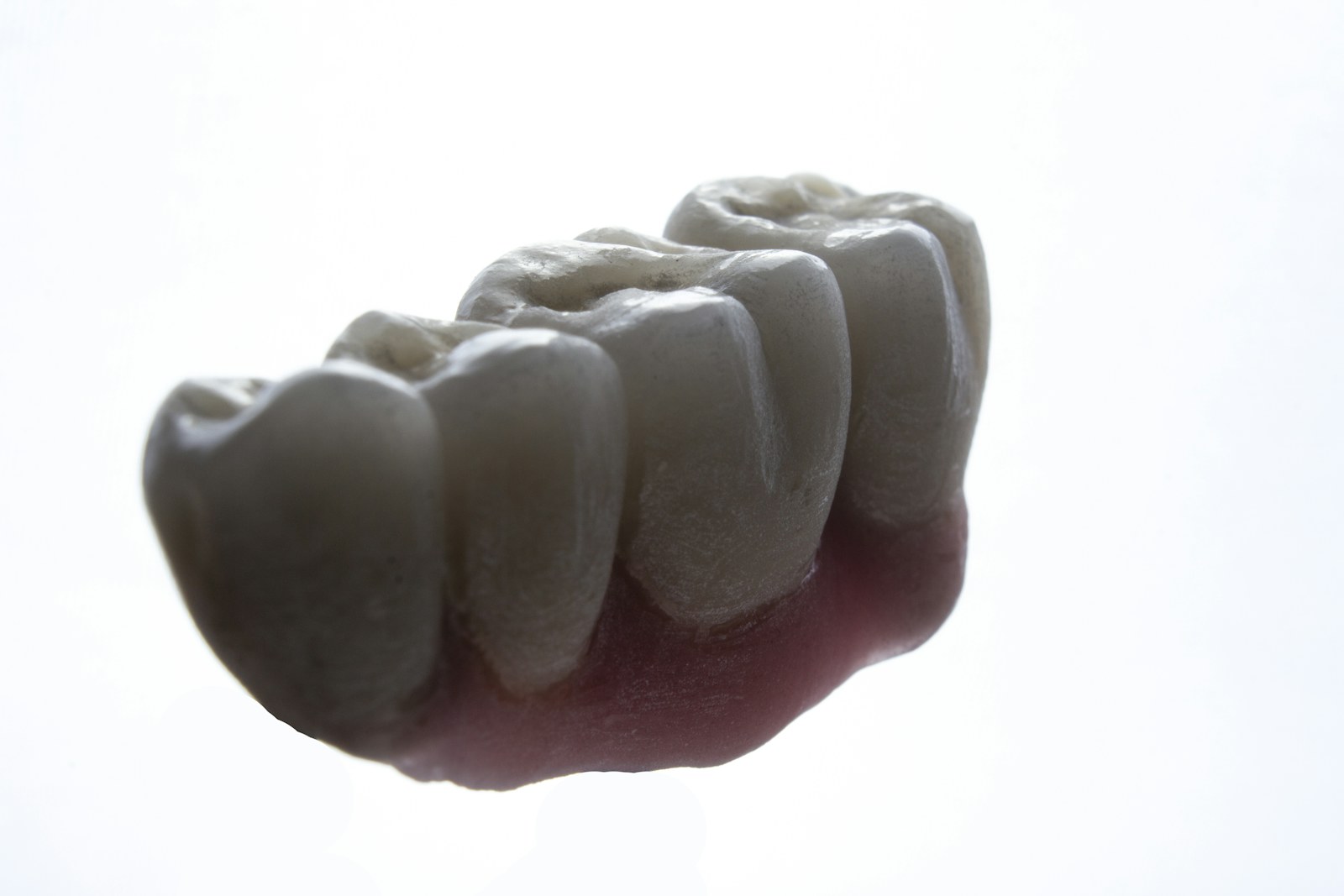
The Biggest Difference: Rebuilding the Bite, Not Just the Teeth
Fixing teeth one at a time can work for years. But when the bite underneath is the problem, each new crown is placed into the same forces that broke the last one.
Full mouth reconstruction starts from the bite instead.
That means deciding how the upper and lower teeth should meet, how tall the teeth should be, and how the jaw should rest, and then building every restoration to that plan.
A reconstruction succeeds or fails on the bite.
Before anything is final, the planned bite and smile are usually tried in temporary restorations. The 2025 review found no proof that this trial phase improves outcomes on its own, but it does help manage expectations and sequence treatment, and it works best with fixed temporaries (Chantler et al., 2025). Put simply, it lets you live with the new bite before it is permanent.
What We Look at Before Recommending Full Mouth Reconstruction
A full reconstruction is a big decision, so the evaluation is thorough. Dr. Ema looks at:
- Every tooth, one by one: which can be restored, which have a guarded outlook and which cannot be saved.
- Your gums and bone: active gum disease is treated first, and bone is measured with 3D CBCT imaging where implants are an option.
- Your bite and jaw joints: wear patterns, jaw pain, and whether you clench or grind.
- Your health history: medical conditions and medications that affect healing.
- Your face and smile: how much tooth shows, lip support and the shape of your lower face.
- Your priorities and budget: fixed versus removable, how fast, and how to phase the work.
This is all done in one place. Dr. Ema plans, places and restores implants herself, using CBCT imaging and guided surgery, so you are not passed between offices. Our specialty technology page describes the tools involved.

How Long Does Full Mouth Reconstruction Take?
Most reconstructions happen in phases over several months, sometimes longer when implants or grafting are involved. A typical sequence:
Diagnose and plan
Exam, X-rays, 3D imaging, photos, a digital scan and a written plan.
Get healthy
Gum treatment, removal of teeth that cannot be saved, root canals and any urgent repairs.
Lay the foundation
Implants and, where needed, bone or sinus grafting. Implants then fuse with the bone before they are loaded with final teeth.
Test drive
Temporary restorations to confirm the new bite, speech and appearance.
Final restorations
Crowns, bridges, veneers or full-arch teeth, made to the approved design.
Protect
A night guard if you grind, and a regular maintenance schedule.
Phasing has a practical upside: the work, and the cost, can be spread out.
What Are the Risks and Limits?
- Surgery carries normal surgical risks, such as swelling, bruising and, rarely, infection or an implant that does not fuse.
- Implants can develop peri-implantitis without good home care and regular cleanings (Diaz et al., 2022).
- Restorations wear and can chip, especially in people who grind. They may eventually need repair or replacement.
- Adaptation takes time. A new bite can feel unfamiliar, and speech may need a short period to settle (Chantler et al., 2025).
- Some health conditions and habits affect healing, so your medical history shapes the plan.
- It is a commitment of time, visits and budget. A shorter, staged plan is sometimes the better choice.

How Much Does Full Mouth Reconstruction Cost in Chicago?
Full mouth reconstruction has a wide cost range because it can mean anything from a series of crowns to new teeth on implants in both jaws. Your fee depends on:
- how many teeth are restored or replaced
- whether implants, grafting or a full-arch prosthesis are part of the plan
- gum treatment, extractions or root canals needed first
- the materials chosen for crowns, veneers and prostheses
Here in Printers Row, every plan comes with a written fee before treatment, and large plans can be phased to fit your budget.
- Financing: CareCredit, Cherry, Sunbit and Alpheon Credit.
- Insurance: we accept most PPO plans as out of network and help you maximize your benefits. Restorative work is often treated differently from cosmetic work, so we can help you check your coverage.
- Membership plan: $55 a year, with discounts on preventive and periodontal care and no waiting periods.
See our Patient Center for payment details.
Full Mouth Reconstruction Questions Patients Ask
Is full mouth reconstruction an option if I already wear dentures?
Yes. Many long-time denture wearers can move to implant-supported dentures or a fixed All-on-4® arch. In a systematic review, implant-supported overdentures gave better retention, comfort and chewing than conventional dentures (Mishra & Chowdhary, 2019).
Will I be without teeth while my implants heal?
Your plan shows what you will wear at every stage. Temporary teeth or a temporary denture are normally part of the sequence, so you can talk, smile and eat while the implants fuse with the bone. Ask us to walk you through yours.
Is bone grafting always needed?
No. It depends on how much bone you have where the teeth will go, which is measured with 3D CBCT imaging. All-on-4® uses tilted back implants that often avoid invasive grafting, and bone or sinus grafting is planned only where it is needed.
Will I need to see several different specialists?
Usually not. Dr. Ema plans, places and restores implants herself, and our studio also provides gum treatment, root canals, extractions and TMJ care, so most of your treatment stays in one place with one dentist.
Can full mouth reconstruction help with jaw pain?
Sometimes. When jaw or TMJ pain is linked to a worn or collapsed bite, restoring how the teeth meet can be part of the plan. Not all jaw pain comes from the teeth, so the cause is evaluated before any treatment is recommended.
How do I look after a full mouth reconstruction at home?
Brush twice a day, clean between teeth and around implants with floss, small brushes or a water flosser, and wear your night guard if you grind. Keep your cleaning and checkup schedule, because problems around implants are easiest to treat early.
Final Takeaways
- Full mouth reconstruction rebuilds how your teeth work together, not just how they look.
- It does not automatically mean removing all of your teeth; savable teeth are kept.
- Chewing ability is linked to nutrition, so function matters as much as appearance.
- The bite is planned and tested in temporaries before anything is permanent.
- Implants have strong long-term survival, but they still need regular care.
- Treatment is phased, which spreads out both healing and cost.
- You get a written plan and fee before treatment begins.
Missing teeth are the main concern? Start with our dental implants page.

Dr. Ema is a Master in the Academy of General Dentistry, a distinction held by the top 2% of dentists, with more than 2,000 hours of continuing education. She earned her DDS at the University of Illinois at Chicago, completed an Advanced Education in General Dentistry residency with the U.S. Air Force, and has cared for patients in Printers Row since 2017.
Meet Dr. EmaPrinters Row · South Loop · Chicago
Ready for a clear plan?
Book a consultation with Dr. Ema at 705 S Clark St. You will leave with your options, a written plan and your fee, with no pressure to decide that day.
Prefer to write? Send us a message. Also read: Transforming Your Smile: Steps to a Successful Smile Makeover.
Research References
- Nitsuwat S, Webster J, Sarkar A, Cade J. The association of oral processing factors and nutrient intake in community-dwelling older adults: a systematic review and meta-analysis. Nutrition Reviews. 2025;83(3):e762. doi.org/10.1093/nutrit/nuae080
- Chantler J, Strasding M, Strauss F, Ioannidis A, Naenni N. Importance of an evaluation phase when increasing the occlusal vertical dimension: a systematic review. Journal of Esthetic and Restorative Dentistry. 2025;37(3):669–689. doi.org/10.1111/jerd.13331
- Howe MS, Keys W, Richards D. Long-term (10-year) dental implant survival: a systematic review and sensitivity meta-analysis. Journal of Dentistry. 2019;84:9–21. doi.org/10.1016/j.jdent.2019.03.008
- Kupka JR, König J, Al-Nawas B, Sagheb K, Schiegnitz E. How far can we go? A 20-year meta-analysis of dental implant survival rates. Clinical Oral Investigations. 2024;28(10):541. doi.org/10.1007/s00784-024-05929-3
- Diaz P, Gonzalo E, Gil Villagra LJ, Miegimolle B, Suarez MJ. What is the prevalence of peri-implantitis? A systematic review and meta-analysis. BMC Oral Health. 2022;22:449. doi.org/10.1186/s12903-022-02493-8
- Mishra SK, Chowdhary R. Patient's oral health-related quality of life and satisfaction with implant supported overdentures: a systematic review. Journal of Oral Biology and Craniofacial Research. 2019;9(4):340–346. pmc.ncbi.nlm.nih.gov/articles/PMC6723409/
- Nobre MA, Lopes A, Antunes E. The 10 year outcomes of implants inserted with dehiscence or fenestrations in the rehabilitation of completely edentulous jaws with the All-on-4 concept. Journal of Clinical Medicine. 2022;11(7):1939. doi.org/10.3390/jcm11071939
This article is for general education and is not a diagnosis or a promise of a specific result. Your options are decided at an examination with Dr. Ema.