

Quick answer:
A successful smile makeover follows a clear order. First a full exam and digital records, then any gum, bite or decay problems are treated. Next your new smile is designed and previewed before any tooth is changed. After that the teeth are aligned and whitened if needed, then shaped with veneers, bonding or implants, and finally protected.
It usually starts with a photo.
A friend tags you in a group picture. Everyone looks happy, and the first thing you see is the chipped front tooth, or the gap, or the shade that is a little darker than everyone else's.
You untag yourself. You notice that you have started smiling with your lips closed.
If that sounds familiar, you are in good company. In one survey of 410 university students, only about a third were satisfied with their teeth, and those who felt their teeth affected them socially tended to report lower self-esteem (Stojilković et al., 2024).
So you start wondering what a "smile makeover" actually involves.
The simple answer is… a smile makeover is a planned combination of treatments, such as whitening, aligners, bonding, veneers or implants, chosen to change how your smile looks.
The more honest answer is… the treatments are the easy part to name. What decides whether the result looks natural and lasts is the order they happen in, and how much planning comes before anyone picks up a drill.
A great smile makeover is designed first and built second.
What Is a Smile Makeover, Really?
A smile makeover is not one procedure. It is a treatment plan built around what you want to change: color, shape, length, spacing, alignment or missing teeth.
For one person that means whitening plus two bonded edges. For another it means Invisalign® first and porcelain veneers after. For someone missing a tooth, it may include a dental implant.
The goal is the same in every case: a smile that fits your face, works with your bite, and still looks like you.
What Are the Steps of a Smile Makeover?
At Printers Row Dental Studio in Chicago's South Loop, a makeover follows the same sequence for almost everyone. Some steps are short, and some are skipped when they are not needed, but the order rarely changes.
Consultation and records
An exam, photos, a digital scan and a smile simulation. This is where you explain what bothers you, in your own words.
Health comes first
Decay, gum inflammation or a bite problem is treated before cosmetic work. Veneers placed on unhealthy gums or over an unstable bite rarely look good for long.
Design and preview
Your new smile is designed digitally, then tried in the mouth as a temporary Trial Smile, so you can see it, talk with it and adjust it.
Move and brighten
If teeth are crowded or rotated, aligners can move them first. Whitening comes next, so the final porcelain or bonding can be matched to your brighter natural teeth.
Shape and restore
Veneers, bonding, crowns or implants change the shape, length and color of the teeth that need it.
Fit and fine-tune
The shade is checked with a digital spectrophotometer, and the bite is adjusted so the new surfaces meet evenly.
Protect and maintain
Cleanings, home care and, for people who clench or grind, a night guard to protect the new work.
Skipping step two or three is the most common reason makeovers disappoint. The rest of this article explains why.
The Biggest Difference: Planning the Smile Before Touching a Tooth
Without a preview, the first time you see your new smile can be the day it is bonded in place. If it is too long, too white or too square, it is already permanent.
That is why the smile is designed and previewed first.
Digital smile design uses photos and scans of your face and teeth to plan tooth shape and proportion before treatment. A 2024 systematic review found that it improved communication between patient and dentist, reduced errors and was associated with higher patient satisfaction (Jain et al., 2024).
A 2025 review reached a similar conclusion: smile design consistently improved satisfaction, treatment acceptance and how predictable patients felt the result was. The authors also noted that the studies were small and varied, so more long-term research is needed (Alwabel et al., 2025).
In practice, it works like this. Dr. Ema takes photos and an iTero scan, designs the smile, and then you wear a temporary version of it. You can smile in a mirror, take selfies, ask your partner, and change the details before anything is final.
You approve the smile before your teeth are prepared, not after.
The technology at our studio supports each step: digital X-rays and photography for records, the VITA Easyshade® spectrophotometer for shade matching, and a diode laser for gum contouring when the gumline is uneven.
Veneers, Bonding or a Snap-On Smile: Which Is Right for Me?
These three options change how the front teeth look, but they solve different problems.
| Porcelain veneers | Composite bonding | Snap-On Smile | |
|---|---|---|---|
| What it is | Thin porcelain shells bonded to the front of the teeth | Tooth-colored resin shaped by hand on the tooth | A custom removable arch that clips over your teeth |
| Best for | A lasting change in color, shape and length | Small chips, gaps and edges | Work or events, without changing your teeth |
| Visits | Usually two, after design and Trial Smile | Often one | A model, then a fitting |
| Tooth changes | Some enamel is usually prepared | Little or none | None |
| Upkeep | Most durable surface and color | Can stain and need polishing or repair | Removed for cleaning; not for all-day wear |
| Relative investment | $$$ | $ | $$ |
Porcelain veneers hold up well. A systematic review of 25 studies and about 6,500 veneers estimated a 10-year survival rate of 95.5%. Fractures and debonding were the most common problems, and most happened in the first years after placement (Alenezi et al., 2021).
Bonding is more conservative and less costly. In a two-year randomized trial, composite and ceramic veneers had similar survival (93.4% and 95%), but the composite ones picked up more staining and surface roughness and needed more maintenance (Elkaffas et al., 2024). Two years is a short follow-up, so treat that as an early signal rather than the final word.
A Snap-On Smile is the only one of the three that is fully removable. It suits people who want a confident smile for specific occasions without changing their natural teeth.
What We Look at Before Recommending a Smile Makeover
Two people can ask for "whiter, straighter teeth" and need completely different plans. Before recommending anything, we look at:
- Gum health. Inflamed or receding gums change how any restoration looks and how long it lasts.
- Your bite. How your teeth meet, and whether you clench or grind, affects what materials will survive.
- Tooth position. Teeth that are crowded or rotated may need aligning first, so less tooth structure needs to be prepared later.
- Existing work. Old fillings, crowns or bridges may need replacing so everything matches.
- Your face and lips. How much tooth shows when you talk and smile guides length and shape.
- Your goals and timeline. A wedding in three months calls for a different plan than a long-term project.
- Your budget. There is almost always more than one route to a better smile.
On alignment specifically, a systematic review found that clear aligners and braces both treated malocclusion effectively. Aligners had the edge for shorter treatment time and segmented movements, while braces did better at fine control of tooth angle and bite contacts (Ke et al., 2019). That is why the decision depends on which teeth need to move, and how.
How Long Does a Smile Makeover Take?
It depends on which steps you need.
- Whitening and bonding only: often a few visits over a few weeks.
- Porcelain veneers: usually two treatment visits once the smile has been designed and previewed.
- Aligners first: Invisalign treatment typically runs 12 to 18 months, and veneers or bonding follow afterwards.
- Replacing a missing tooth with an implant: several months, because the implant needs time to fuse with the bone before the final crown.
Implants are a reliable part of a makeover when a tooth is missing. A systematic review of long-term studies estimated 10-year implant survival at 96.4% (Howe et al., 2019).
If you have a deadline, say so at your first visit. Treatment can often be staged so the most visible changes are done first.

What Are the Risks and Limits of a Smile Makeover?
A good plan is honest about trade-offs.
- Veneers are usually permanent. Most require some enamel to be prepared, and enamel does not grow back. The tooth will always need a restoration.
- Restorations can chip or come loose. Fracture is the most common veneer problem in the research, which is why grinding is addressed before and after treatment (Alenezi et al., 2021).
- Bonding needs more upkeep. It can stain and roughen over time (Elkaffas et al., 2024).
- Whitening affects natural teeth, not restorations. That is why whitening usually happens before porcelain or bonding is shade-matched. Researchers note that improving whitening on composite still needs more work (Malcangi et al., 2023).
- Whitening can cause temporary sensitivity. The gel and approach are chosen for each patient to limit side effects on teeth and gums (Malcangi et al., 2023).
- Not every problem is cosmetic. If teeth are worn down, missing or the bite has collapsed, you may need a broader restorative plan. Our guide to full mouth reconstruction facts and myths explains the difference.
If dental visits make you anxious, you are not stuck. We offer minimal sedation with nitrous oxide or Valium, along with warm blankets, noise-cancelling headphones and Netflix in the chair.
How Much Does a Smile Makeover Cost in Chicago?
There is no single price, because no two makeovers include the same treatments. The fee depends on:
- how many teeth are treated
- porcelain versus bonding
- whether aligners, whitening, gum contouring or implants are part of the plan
- any health treatment needed first
What you can count on at our studio is a written plan with your fee before treatment begins. A cosmetic consultation has a fee, which our team confirms when you book.
To make treatment manageable:
- Financing is available through CareCredit, Cherry, Sunbit and Alpheon Credit.
- Insurance: we accept most PPO plans as out of network and help you use your benefits. Plans often treat purely cosmetic work differently from restorative care, so ask us to check yours.
- Our membership plan is $55 a year and includes a $200 credit toward Invisalign or veneers.
Details are on our Patient Center page.

Smile Makeover Questions Patients Ask
Can I get a smile makeover if I grind my teeth?
Yes, but grinding is planned for from the start. Fracture is the most common problem with porcelain veneers, so we look at your bite before treatment and usually recommend a custom night guard afterwards to protect the new work (Alenezi et al., 2021).
Can I whiten my teeth after I get veneers?
Whitening gels lighten natural teeth, not porcelain or bonding, so your veneers keep the shade they were made in. That is why we whiten first and match the veneers to your brighter teeth. If you whiten later, only the natural teeth change.
Will my old fillings and crowns need to be replaced?
Only if they are in your smile line and will not match the new shade or shape, or if they are failing. We check every visible restoration at the exam, and your written plan lists exactly which ones are included.
Can a smile makeover be done in stages?
Yes. Many patients start with whitening or aligners and add veneers or bonding later. Staging can also spread the cost, and financing is available through CareCredit, Cherry, Sunbit and Alpheon Credit.
Is there a fee for a cosmetic consultation?
Yes. A cosmetic consultation has a fee, which our team confirms when you book. It includes an exam, photos, a digital scan and a smile simulation, and you leave with your options and your fee in writing.
Can a smile makeover fix a gummy smile?
Sometimes. When extra gum tissue makes teeth look short, gum contouring with a diode laser can reshape the gumline as part of the plan. A gummy smile can also come from the lip or jaw, so the cause is checked first.
Final Takeaways
- A smile makeover is a plan, not a single procedure.
- Health comes first: gums, decay and bite problems are treated before cosmetic work.
- Design and preview the smile before any tooth is prepared.
- Align and whiten first, then shape with veneers, bonding or implants.
- Porcelain veneers have strong long-term survival; bonding is more conservative but needs more upkeep.
- Protect the result with cleanings and, if you grind, a night guard.
- You get a written plan and fee before treatment starts.
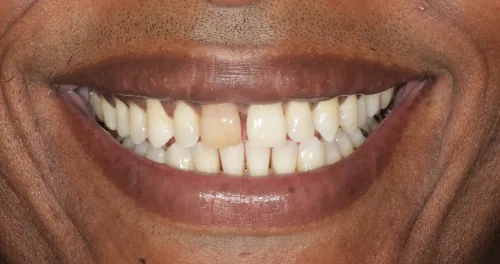
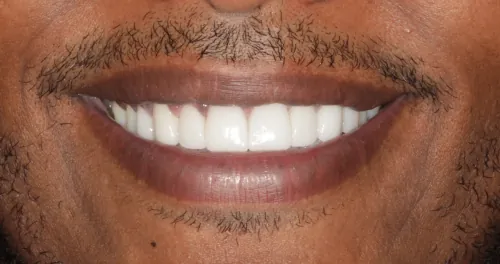
Want to see real results first? Browse our smile gallery.

Dr. Ema is a Master in the Academy of General Dentistry, a distinction held by the top 2% of dentists, with more than 2,000 hours of continuing education. She earned her DDS at the University of Illinois at Chicago, completed an Advanced Education in General Dentistry residency with the U.S. Air Force, and has cared for patients in Printers Row since 2017.
Meet Dr. EmaPrinters Row · South Loop · Chicago
Ready to design your new smile?
Book a consultation with Dr. Ema at 705 S Clark St. You will leave with your options, a written plan and your fee, with no pressure to decide that day.
Prefer to write? Send us a message. Also read: Facts and Myths About Full Mouth Reconstruction.
Research References
- Stojilković M, Gušić I, Berić J, Prodanović D, Pecikozić N, Veljović T, Mirnić J, Đurić M. Evaluating the influence of dental aesthetics on psychosocial well-being and self-esteem among students of the University of Novi Sad, Serbia: a cross-sectional study. BMC Oral Health. 2024;24:277. doi.org/10.1186/s12903-024-04002-5
- Jain A, Bhushan P, Mahato M, Solanki BB, Dutta D, Hota S, Raut A, Mohanty AK. The recent use, patient satisfaction, and advancement in digital smile designing: a systematic review. Cureus. 2024;16(6):e62459. doi.org/10.7759/cureus.62459
- Alwabel LK, Alabduljabar WM, Alawfi LK, Al Johani NK, Alharbi LE, Kharif MA, Albahrani FD, Alarjani MB, Alzahrani MS, Alshammari AA, Alashjai A, Alanaz L. Digital smile design and patient-centered outcomes in esthetic restorative dentistry: a systematic review. Cureus. 2025;17(11):e98084. doi.org/10.7759/cureus.98084
- Alenezi A, Alsweed M, Alsidrani S, Chrcanovic BR. Long-term survival and complication rates of porcelain laminate veneers in clinical studies: a systematic review. Journal of Clinical Medicine. 2021;10(5):1074. doi.org/10.3390/jcm10051074
- Elkaffas AA, Alshehri A, Alqahtani AR, Abuelqomsan MA, Deeban YAM, Albaijan RS, Alanazi KK, Almudahi AF. Randomized clinical trial on direct composite and indirect ceramic laminate veneers in multiple diastema closure cases: two-year follow-up. Materials. 2024;17(14):3514. doi.org/10.3390/ma17143514
- Ke Y, Zhu Y, Zhu M. A comparison of treatment effectiveness between clear aligner and fixed appliance therapies. BMC Oral Health. 2019;19:24. doi.org/10.1186/s12903-018-0695-z
- Howe MS, Keys W, Richards D. Long-term (10-year) dental implant survival: a systematic review and sensitivity meta-analysis. Journal of Dentistry. 2019;84:9–21. doi.org/10.1016/j.jdent.2019.03.008
- Malcangi G, Patano A, Inchingolo AD, Ciocia AM, Piras F, Latini G, Di Pede C, Palmieri G, Laudadio C, et al. Efficacy of carbamide and hydrogen peroxide tooth bleaching techniques in orthodontic and restorative dentistry patients: a scoping review. Applied Sciences. 2023;13(12):7089. doi.org/10.3390/app13127089
This article is for general education and is not a diagnosis or a promise of a specific result. Your options are decided at an examination with Dr. Ema.